My First Dog

Updated: 6 hours ago
I can summarize this entire article in the following line:
Your dog will love you 100%. So before considering inviting a dog into your life, ask yourself this question: Am I available to love 100% in return?
Of course, that's not how it starts.
It starts with a cute face.
Love at first sight.
Your eyes see the dog, your heart feels at ease in its presence.
Your entire soul screams: Be In My Life, Please!
You fall in love.
And you decide: Let's have a dog.
This is how it starts... but after that, what happens?
How much can you expect a dog to change your life?
And more importantly, how much are you willing to change your life for that dog?
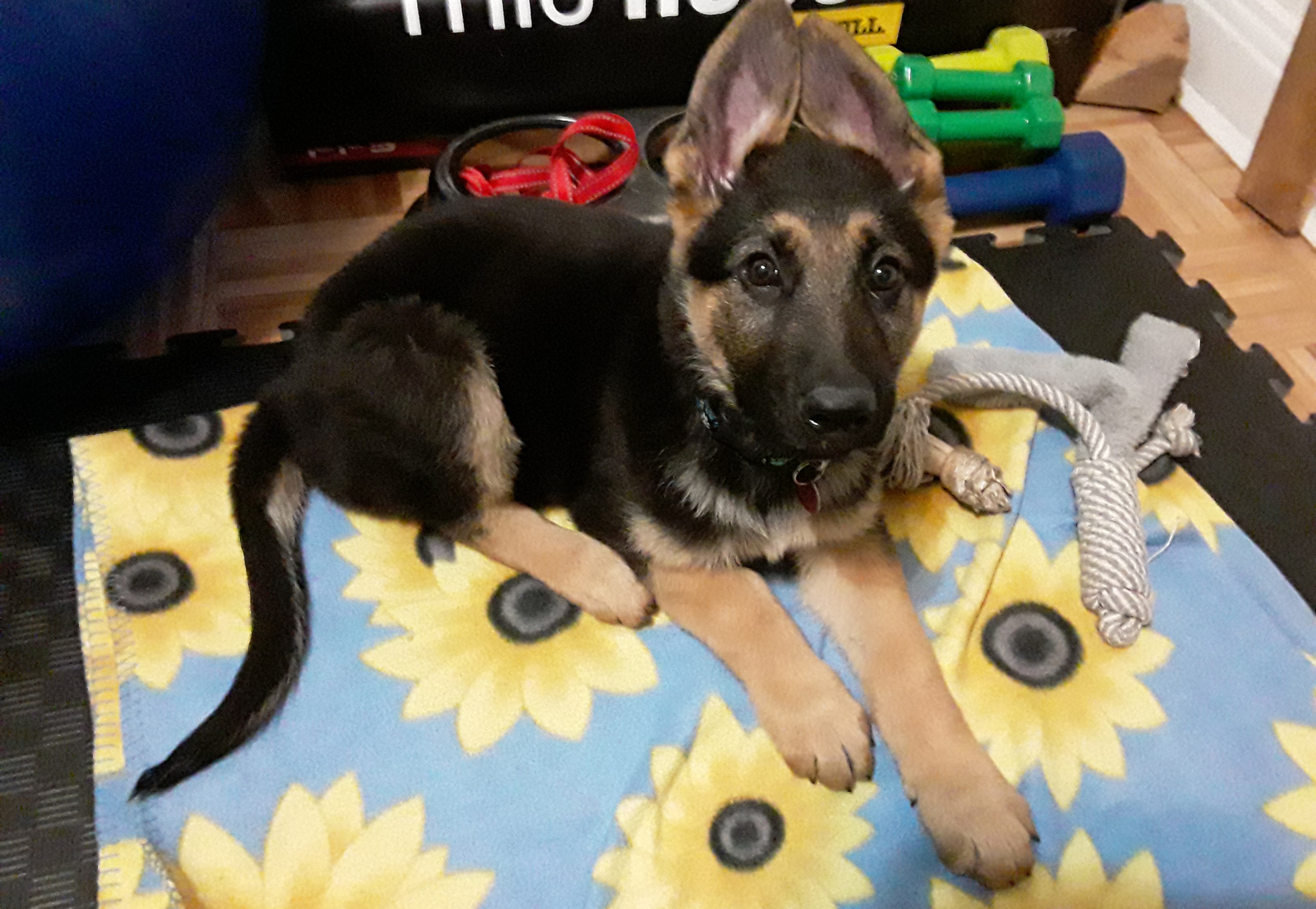
Thachi is a rescue.
Mostly for personal reasons... I won't disclose the circumstances under which he came into our lives. What I can say is this: Between the idea and the reality, there is always a gap.
The family who first adopted him had underestimated just how much energy it would take to raise a crazy puppy into a well-behaved dog.
And not just any puppy.
A German Shepherd.
Which is to say... a highly intelligent breed, with incredible drive, curiosity, and energy.
A particular combination.
And from the get-go, I'd say this: If you can't match that energy, the breed is probably not for you.
But here's the thing.
It's not about you.
I'm sorry, it's not.
It's not about "I want a dog."
It can start there, but it has to evolve fast.
I lived it firsthand.
I wanted that dog.
My soul was screaming: This particular dog is MY dog. MY friend.
We have a story to live together.
But wanting a dog and being ready to share your entire life with one... those are two very different things.
And I was about to learn that firsthand.
At the time, I was studying programming (entry-level, nothing crazy). And it was requiring all my limited intellectual capacities. I needed to be all-in in that world, which was far from what I'm naturally good at. But I wanted to learn some basics... and for a time, I was indeed all-in.
And it's at that exact moment that Thachi entered our lives.

The shock was immense.
We loved him from the start. How could you possibly not love that inconceivably beautiful puppy?!
At the time, we were still living in the city. In a small three-room apartment. Fortunately, with a nice park nearby, but still... not ideal for a German Shepherd.
I loved him so much. But I was also doing my best to get into that weird world of C++.
So... he was a distraction.
A demanding distraction.
The kind of distraction that occupies your mind at all times.
Even when he's quiet.
Especially when he's quiet.
"What the hell is he chewing now?"
The change is immense: you have to learn that you no longer have 100% of your time to yourself... which is a pretty big deal for a lot of us, especially in this day and age, where, let's admit it, we're all very selfish with our time.
And so was I.
I loved studying, I loved working on projects, I loved going on bike rides with my girlfriend, going kayaking together...
But all of a sudden, we couldn't.
Not in the same way, anyway.
All of a sudden, life was not ONLY about us.
There was this other being, very cute but very demanding.
And he needed us. Constantly.
We're not the kind of people who would put a dog in a crate. So we refused to buy one. I don't judge people who use one: it's just not for us.
That meant... we could no longer simply leave and do things by ourselves. At least until he was capable of being alone for a while.
And that required time. Training. Patience.
Lots of patience.
All of this might sound mundane, but listen: this is one of the reasons dogs end up in shelters.
People fall in love with the idea of having a dog without fully understanding what that idea will demand of them.
And when reality finally catches up, some discover that they're simply not prepared for it.
Of course, dogs end up in shelters for all sorts of reasons. Financial hardship, housing problems, illness, unexpected changes in people's lives... sometimes circumstances leave people with very few options.
But sometimes, it's also a matter of expectations.
The cute puppy was supposed to fit into an already established life.
Instead, that puppy needs you to change that life.
And not everyone is willing, or able, to make that change.
For us... yes, it was difficult. Frustrating, overwhelming at times.
Very demanding.
Now I have to become a dog trainer?
Now I have to become... his "parent"?
He NEEDS me... ALL THE TIME.
Yet slowly, something started to change.
Me.
I began to understand that the problem wasn't necessarily how much of my time he required.
It was how much of my time I still expected to belong exclusively to me.
This is why I believe adopting a dog should be an act of LOVE.
Has to be.
Because love, when it becomes a responsibility, asks something of you.
And if you love... if you truly love... you'll be willing to go to the ends of the earth for that love.
And so... we almost did.
We left the city.
Because the dog needed some space.

Then came a different phase of his development: young adulthood.
By this time, I was no longer fighting the fact that my time was no longer my own.
I was welcoming it.
I allowed the experience to teach me the importance of that time. I allowed myself to grow from it.
And something interesting happened.
The time I had once considered lost became some of the most precious time of my life.
This was the golden age of my time with Thachi.
He was our only "baby" at the time: no other dogs... and no actual human baby in the house yet. It was just me, my girlfriend, and our big puppy.
Starting with one dog was accidental, but it was the right accident.
The dynamic totally changes when you have two dogs, and even more when you have three.
What was the dynamic with only one dog?
Pure bond.
I'm his only, he's my only.
We wake up early, go on a walk in nature, climb a hill, come back home, play a little, eat a little...
No complicated logistics. No dividing my attention between three different personalities.
Just Thachi and me, discovering the world together.
Having only one dog also allowed me to become a better trainer.
(Spoiler: I'm not an actual dog trainer... but if you're truly interested in having the best relationship with your dog, you'll eventually find yourself looking for professional information, learning techniques, trying things, making mistakes, and slowly becoming something of a personal trainer for your own dog.)
Having only one dog allowed me to be really attentive to his needs.
It was much easier to "put myself in his shoes" (his paws?).
My patience was 100% for him and him only.
I had all my time to observe him. To learn his habits, his reactions, his little quirks. To recognize when he was confused, excited, frustrated, or simply being a stubborn little... puppy.
And perhaps most importantly, I had the time to recognize when I was the one making mistakes.
That gradual introduction allowed me to become somewhat decent. I think.
I'll share some tricks and techniques I learned along the way in another post. For now, let's keep this one more general.
But here's at least one lesson I can share, one that comes directly from my experience.
We humans anthropomorphize our pets way too much. And sometimes, that harms our relationship with them.
Think about it.
We invite them into our lives, into our homes. We buy them a bed, some cute clothes perhaps, give them a lovely name, call them our "fur babies"...
And I think the reason is simple:
WE LOVE THEM SO DAMN MUCH.
And there's NOTHING wrong with that.
We love them as much as humans. Maybe even more than some humans, let's be honest here!
So in our hearts, they are as high on the list as humans are.
And from there, we sometimes make a leap.
We begin to assume that because they occupy the same place in our hearts, they must also experience the world in ways similar to ours.
But they don't.
They're a totally different species.
With a different outlook on reality.
Their eyes don't perceive colors in the same way we do. Their sense of smell is incomparably more powerful than ours. They experience the world from a different height, through different senses, with different instincts and needs.
And while they're intelligent, sensitive creatures, their way of understanding us is not the same as our way of understanding each other.
Take language, for example.
Dogs can learn words. Of course they can.
They recognize sounds, associate them with objects, actions, people, activities... and some dogs become remarkably good at it.
But that doesn't mean they understand language the way humans do.
They don't know what a word is in the human sense.
They don't understand our sentences simply because we understand them.
And yet, we sometimes talk to them as though they do.
We repeat ourselves. We change our instructions. We use different words to ask for the same thing, or the same words to mean different things.
And then, when the dog doesn't respond the way we expect...
We get frustrated.
"HE KNOWS WHAT I WANT!"
Does he, though?
Or have we simply failed to communicate it in a way he can understand?
Now, dogs are clever little creatures.
Sometimes, perhaps a little TOO clever.
For example, you might think you can outsmart your dog by spelling a certain word instead of saying it out loud.
A word associated with a certain activity that involves going outside...
And then, one day, you discover that your German Shepherd has learned to recognize the sound of the letters being spelled, too.
Right, Thachi?
But to remain serious for a moment here: I think we're doing a huge disservice to our dogs, and especially to our relationships with them, when we forget how differently they experience and interpret the world.
We humans are so freaking good at communicating with words that we take it for granted.
But communicating with a dog requires something else.
Observation.
Consistency.
The willingness to learn a language that isn't entirely our own.
And perhaps most importantly, the humility to recognize that when communication fails, the problem isn't necessarily the dog.
In all good relationships, communication is key.
I guess that's the main takeaway.
And having only one dog in my life really allowed me the time and space to learn the nuances of communicating effectively with Thachi.
Don't get me wrong: it's not perfect.
He's still hard-headed.
He'll still go for a sudden "much-needed" pee when I call him to come over.
"Sorry, I can't right now, I have this urge out of nowhere..."
Yeah.
You better be cute...

So I'd summarize it like this, in one sentence.
In one word, even.
Patience.
Be patient with yourself.
Be patient with your puppy.
You'll make mistakes.
He'll make mistakes.
Sometimes you'll misunderstand each other. Sometimes you'll get frustrated. Sometimes you'll wonder if it's worth the effort.
But keep learning.
Keep trying.
And remember why you invited this little creature into your life in the first place.
You did it for one reason.
One reason only.
Love.
If you truly love, you should be willing to go to the ends of the earth for that love.
And sometimes, the end of that world... is not far at all.
It's simply the end of your world. Of your cocoon. That you have to rip apart and get out of... in order to become a better, more complete version of yourself.

All Photos by Fred.
Comments